

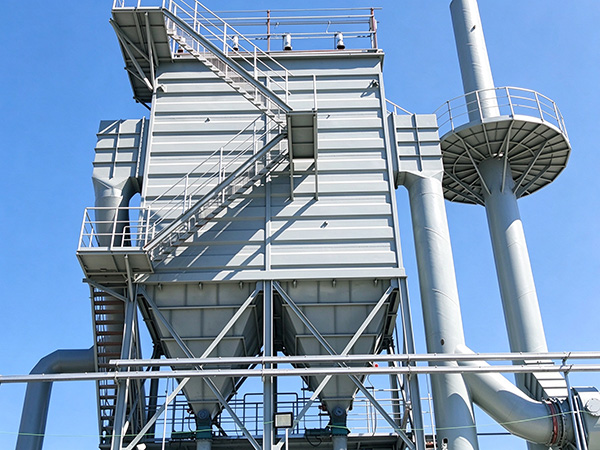
Baghouse
A baghouse is a fabric dust collector that separates dry particulate from exhaust gas using filter bags and support cages. Learn how it works, its main components, common types, applications, selection criteria, installation, operation and maintenance....
What Is a Baghouse
A baghouse, also called a baghouse dust collector or fabric bag collector, is an air pollution control device that separates dry particulate dust from dust-laden gas streams. It uses rows of cylindrical or flat filter bags, often supported by metal cages, to capture particles carried by the exhaust air. As the gas passes through the porous filter fabric, dust accumulates on the bag surface, while cleaned air flows through to the outlet. Collected dust falls into a hopper below and is discharged through a rotary airlock, flap valve, or other dust removal device.
Baghouse collectors are widely used in woodworking, metalworking, mining, cement, food processing, and chemical production where fine dry dust must be controlled before ventilation air is released.
How a Baghouse Dust Collector Works
The process begins when a fan draws dusty air into the collector inlet. The gas enters a dirty air chamber and is directed toward the filter bags. Dust particles are intercepted as the gas travels through the fabric, and the dust cake that forms on the bag surface improves filtration over time. Cleaned air passes through the bag, reaches the clean air plenum, and leaves through the outlet duct or stack.
Once the dust cake builds up and the pressure drop rises, the collector starts a cleaning cycle. Depending on the design, cleaning may use compressed air pulses, reversed air flow, or mechanical shaking. The cleaning action detaches dust from the fabric, and the dislodged material drops into the hopper. The bags then return to normal filtering operation in most continuous-duty configurations.
Main Components of a Baghouse
A complete baghouse assembly includes a welded steel housing, an inlet and outlet section, rows of filter bags, support cages, a clean air plenum, a dust hopper, a cleaning system, and an exhaust fan. The housing sections are bolted or welded together and lined with gaskets to minimize air leakage. Inspection doors and access platforms provide safe entry to the chamber.
Filter bags are the core separation element. They may be made of polyester, acrylic, aramid, fiberglass, or PTFE membrane, selected according to gas temperature, dust abrasiveness, moisture content, and chemical exposure. Cages hold the bags open and evenly distribute the cleaning air. The hopper stores collected dust, while discharge valves transfer material to conveyors, bins, or drums.
Common Baghouse Types
Pulse jet baghouses are the most common modern configuration. Compressed air is delivered through blowing tubes and pulse valves to create short reverse pulses that clean bags while the collector remains online. They offer a compact layout and high filtration velocity, and suit a wide range of dry dust applications.
Reverse air baghouses clean with a low-pressure reversed gas flow that gently collapses and expands the bags. They are often selected for high-temperature, abrasive, or fine dust where gentle cleaning protects fabric life. Shaker baghouses rely on mechanical shaking rods during offline cleaning and are used on smaller, simpler systems.
Applications of Baghouse Collectors
Baghouse systems handle dust from grinding, cutting, sanding, mixing, conveying, packaging, crushing, screening, and pneumatic transfer operations. In cement and lime plants they capture kiln and mill dust; in foundries they control shakeout and finishing dust; in woodworking shops they collect sawdust and shavings; in food and chemical plants they recover product dust that can be returned to the process.
Because collected dust stays dry and recoverable, baghouses support recycling and housekeeping alongside emissions control. They are installed at the dust source, connected by ductwork to hoods or enclosures so dust is captured before it spreads.
Design and Selection Considerations
Selecting a baghouse starts with the properties of the dust and the process gas. Key data include air volume, inlet dust concentration, particle size distribution, gas temperature, humidity, explosion risk, and chemical composition. The filtration area and air-to-cloth ratio are calculated to match these conditions, and the fabric is chosen to resist thermal degradation, abrasion, and chemical attack.
Housing materials depend on ambient conditions and corrosion risk. Explosion relief, spark arrestors, and flame-retardant fabrics may be required for combustible dust. A matched design keeps pressure drop stable, bag life reasonable, and fan energy consumption under control.
Installation, Operation and Maintenance
Installation begins with a prepared foundation and hopper support structure. The housing is erected, bags and cages are installed, ductwork and the fan are connected, and the cleaning air supply is routed to the valves. After installation, the system is checked for air leaks, hopper seals, and bag seating before commissioning. Operators record initial pressure drop, fan current, and compressed air pressure as baseline values.
Routine maintenance includes inspecting bags for tears or blinding, checking pulse valves, clearing compacted dust from the hopper, lubricating moving parts, and replacing worn gaskets. Bags are replaced when media becomes brittle, torn, or too clogged to clean. Keeping the hopper empty prevents dust from climbing back onto the bags, and service records help plan spare parts and avoid downtime.