

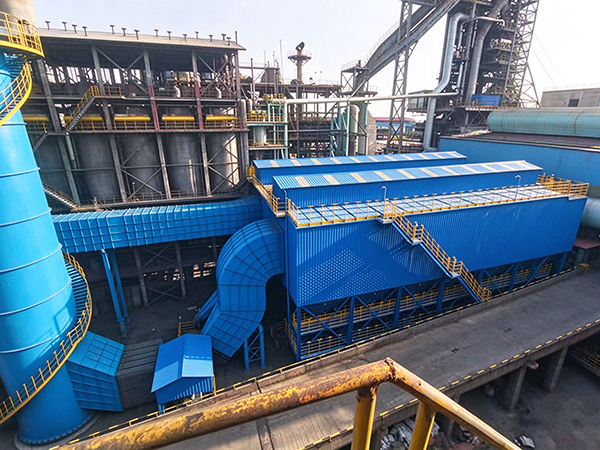
Cast House Baghouse Dust Collector
A cast house baghouse dust collector is designed for foundry and casting operations, collecting dust from shakeout, cooling, grinding and fettling where abrasive metal and sand dust is generated....
What Is a Cast House Baghouse Dust Collector
A cast house baghouse dust collector is designed for foundry and casting operations, collecting dust from shakeout, cooling, grinding and fettling where abrasive metal and sand dust is generated. This equipment is commonly selected for dry particulate control in industrial air handling, where captured dust is kept dry and available for reuse, disposal or return to the process.
It forms part of a dust collection or material handling system connected by ductwork, hoods, hoppers and discharge devices. The design focuses on steady separation, maintainable parts and operation that fits the production layout.
How the Cast House Baghouse Dust Collector Works
Dusty air from cast house hoods is ducted into the baghouse and filtered through fabric bags. Pulse or reverse-air cleaning removes heavy abrasive dust into the hopper, which feeds a discharge valve for removal.
Air movement and separation are balanced so that dust is captured efficiently without drawing excess energy. Cleaning or discharge cycles respond to process conditions, and cleaned air leaves the system through the designated outlet.
Main Components and Construction
The key parts include: Reinforced housing, abrasive-resistant bags and cages, heavy-duty cleaning system, hopper with rotary valve, spark arrestor option, fan and duct connections, access platforms and doors. These components are assembled into a rugged unit suitable for continuous industrial service, with access points arranged for inspection and part replacement.
Materials and finishes are chosen to match the working environment, including dust abrasion, moisture, temperature and chemical exposure. Seals and joints are arranged to reduce air leakage between working sections.
Common Configurations
Available arrangements can be adapted to different airflow volumes, space constraints and mounting positions. Units may be arranged as a standalone collector, an inline duct component, or a discharge device fitted under a hopper or silo.
Material options, sizes and connection styles allow the equipment to match existing ductwork, frame supports and plant layout. Control may be manual, electric, pneumatic or gravity operated depending on the application.
Typical Applications
The Cast House Baghouse Dust Collector is applied across cast shakeout stations, casting grinding and fettling, mold and core making, cooling bed extraction, sand handling and reclamation and foundry finishing lines. In each case the equipment addresses dust generation, material separation or flow control at the source rather than treating dispersed air afterward.
It is used both as a primary collection device and as a supporting part of a larger system, such as an accessory fitted to a collector hopper or a filtering element replaced during routine maintenance.
Selection and Sizing
Account for high abrasion, possible hot metal sparks, dust particle size and continuous shift operation; choose rugged fabric, sturdy cages and spark protection for the inlet. Working drawings, duct dimensions and mounting conditions should be reviewed before final sizing to ensure the unit fits the available space and connects properly to upstream and downstream equipment.
Operating temperature, dust properties and required seal level guide material and component choices. Considering future production changes helps the selected unit keep working conditions stable as output or dust load varies.
Installation and Operation
Installation follows preparation of a firm foundation or duct connection, assembly of the unit, connection to ductwork, utilities and control, and a check for leaks and correct motion before commissioning. Baseline readings such as pressure drop, airflow and drive current are recorded for later comparison.
During operation, staff monitor inlet and outlet conditions, hopper or pocket level, drive or cleaning function, and utility supply. Uniform flow and correct discharge help prevent localized wear and keep the system balanced.
Maintenance and Service
Check for abrasive wear on bags and hopper lining, inspect spark arrestor, service discharge valve, monitor pressure drop, and replace bags before holes allow dust through to the clean side. Keeping service records of replacement dates, pressure trends and component life supports planned maintenance and reduces unexpected stops.
Routine inspection also covers seals, fasteners, wear surfaces and moving parts. Replacing worn parts on schedule preserves separation or sealing performance and extends the service life of the whole unit.
Operating Benefits
When matched to the process, this equipment supports cleaner working air, controlled dust emissions and manageable collected material. Dry separation keeps dust in a reusable or disposable form, and accessible components simplify day-to-day service.
A properly selected and maintained unit helps keep pressure or flow conditions steady, protects downstream equipment, and contributes to organized housekeeping and continuous production.